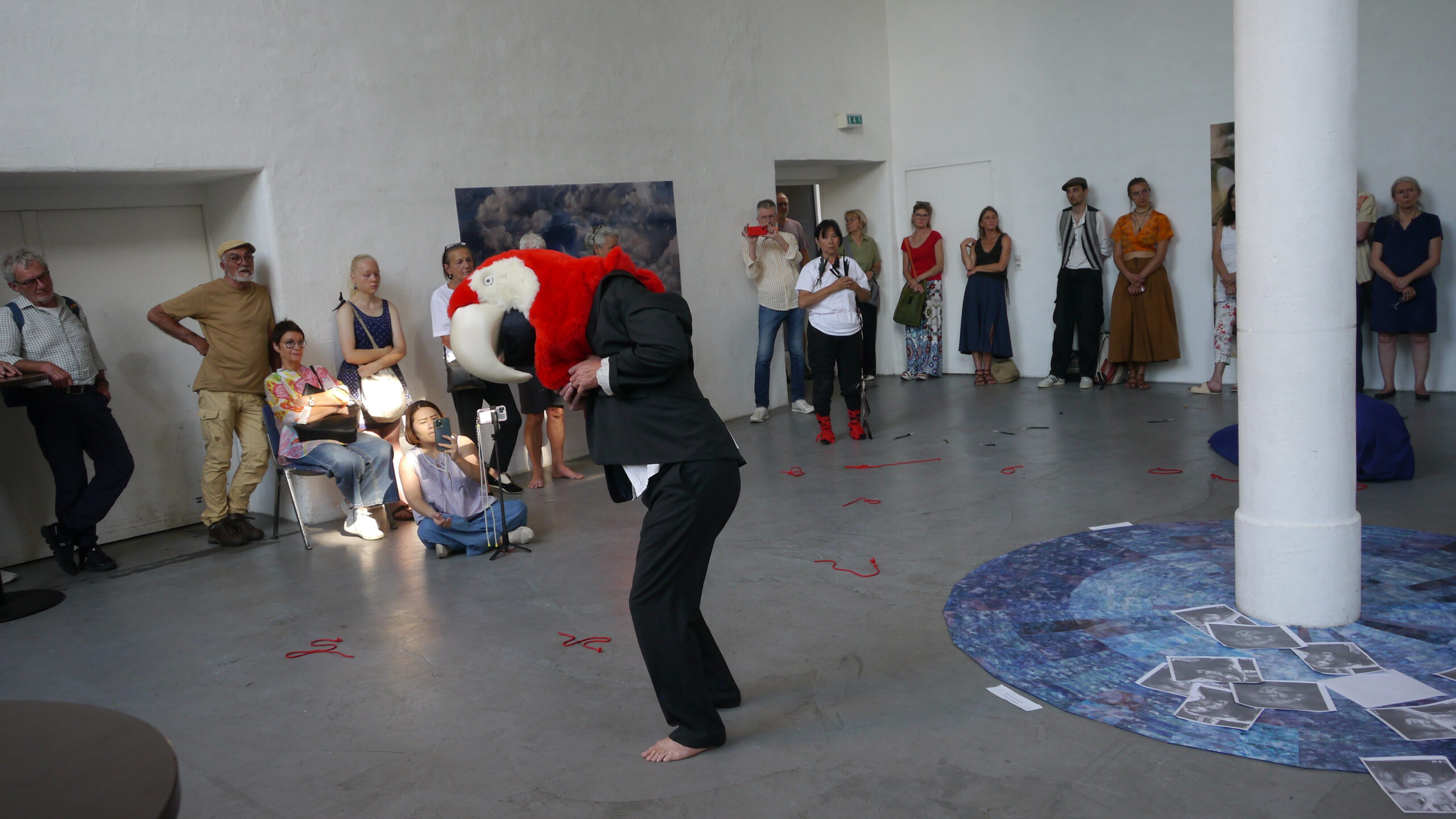
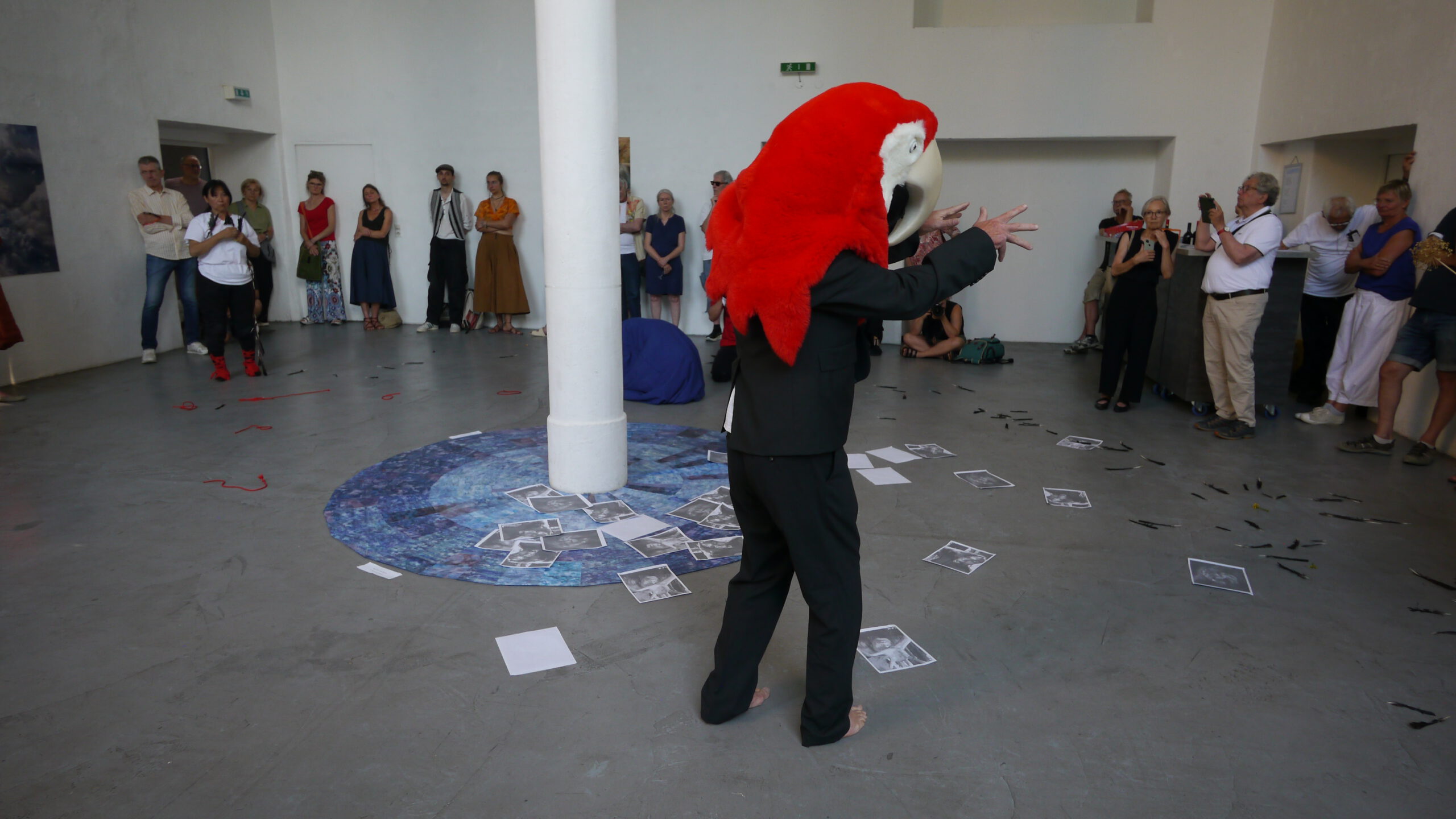
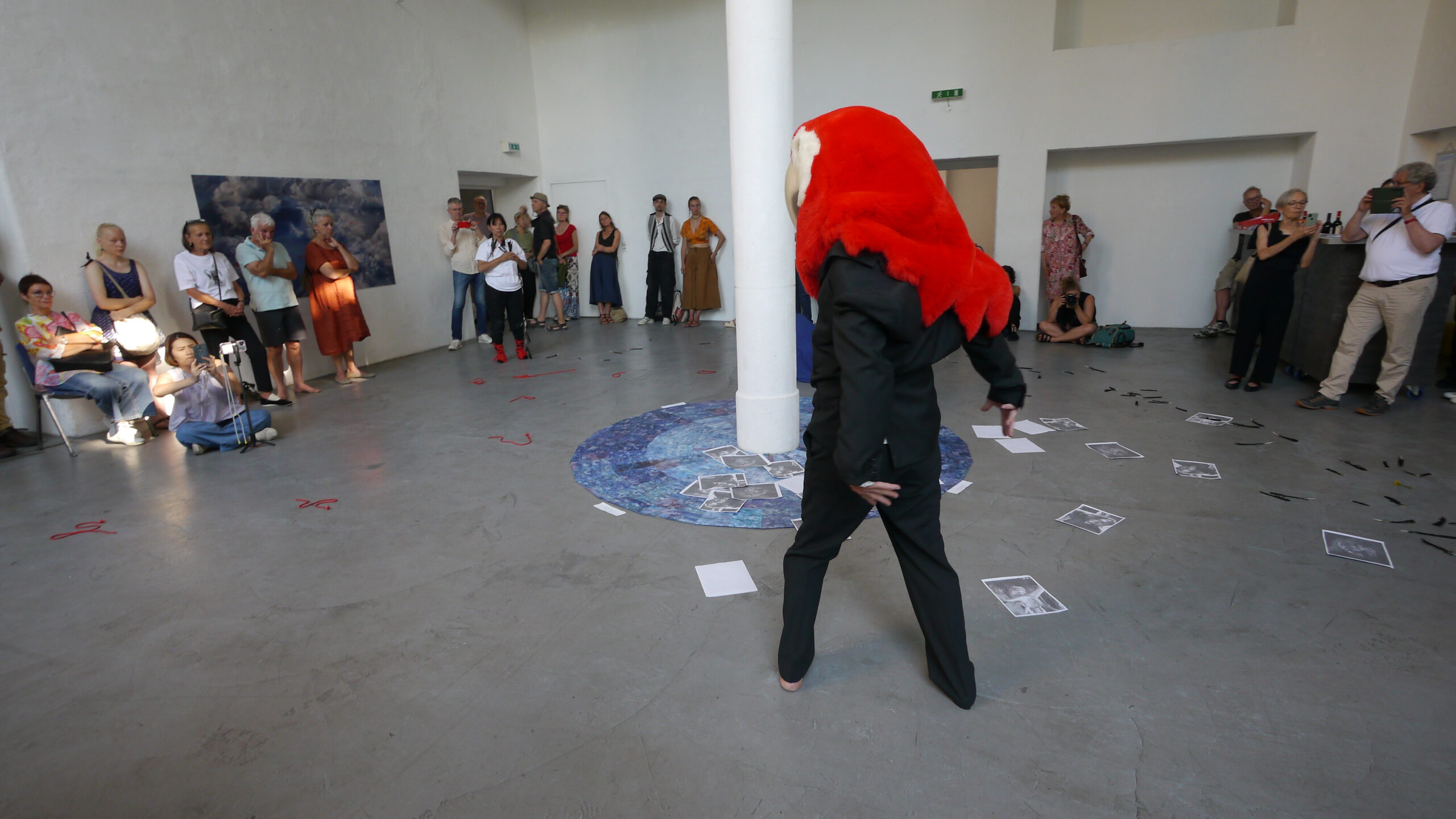
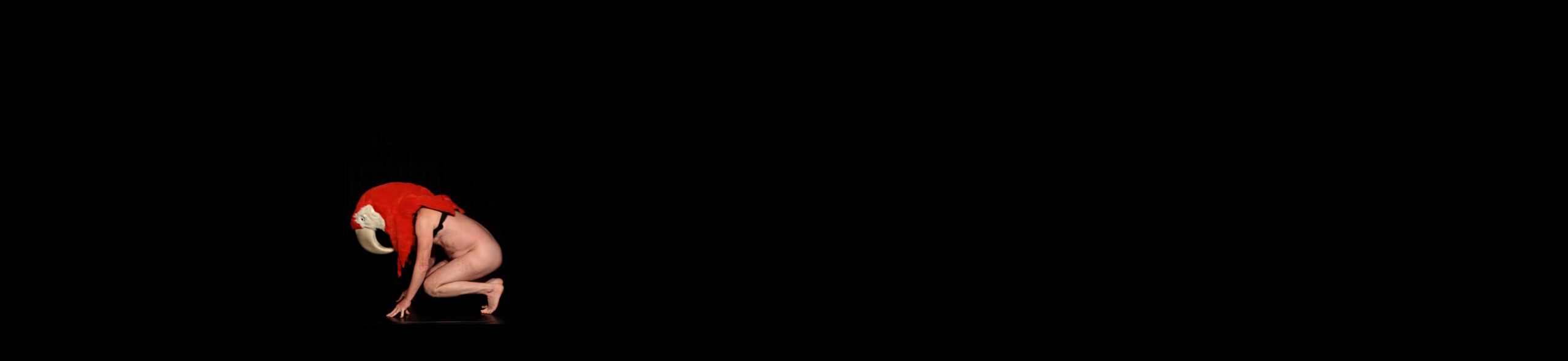
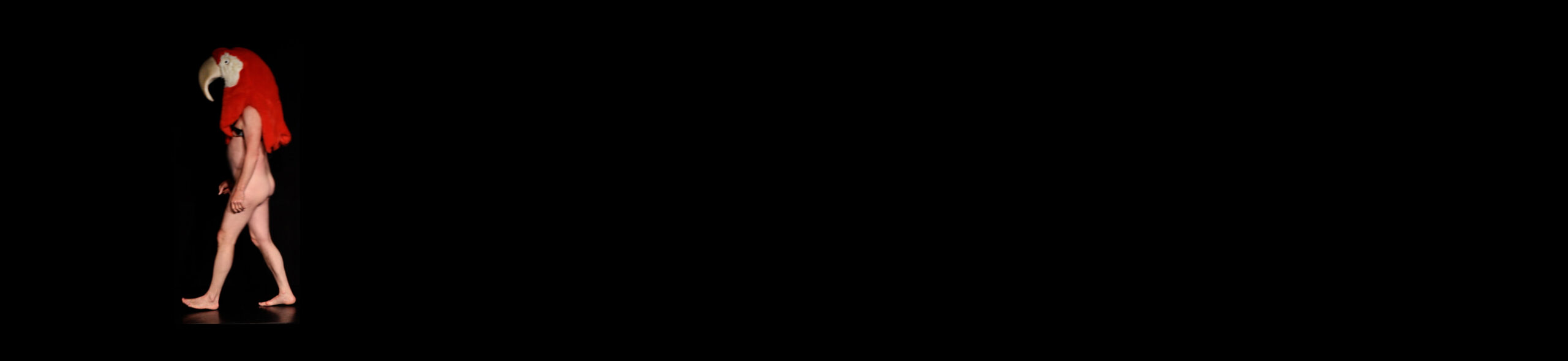
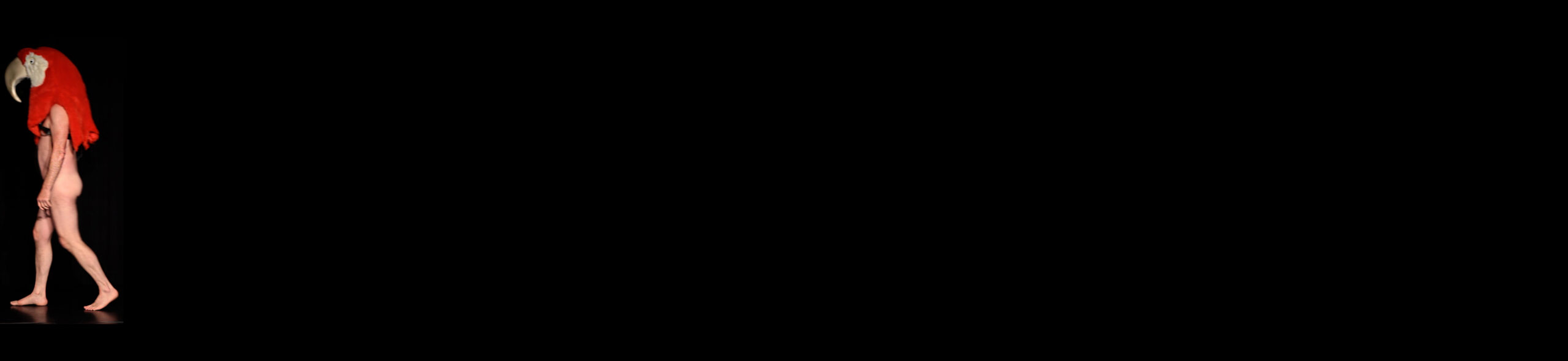
Performance, Galerie Peripherie, Tübingen, 2025
Der Papagei als Kunstfigur
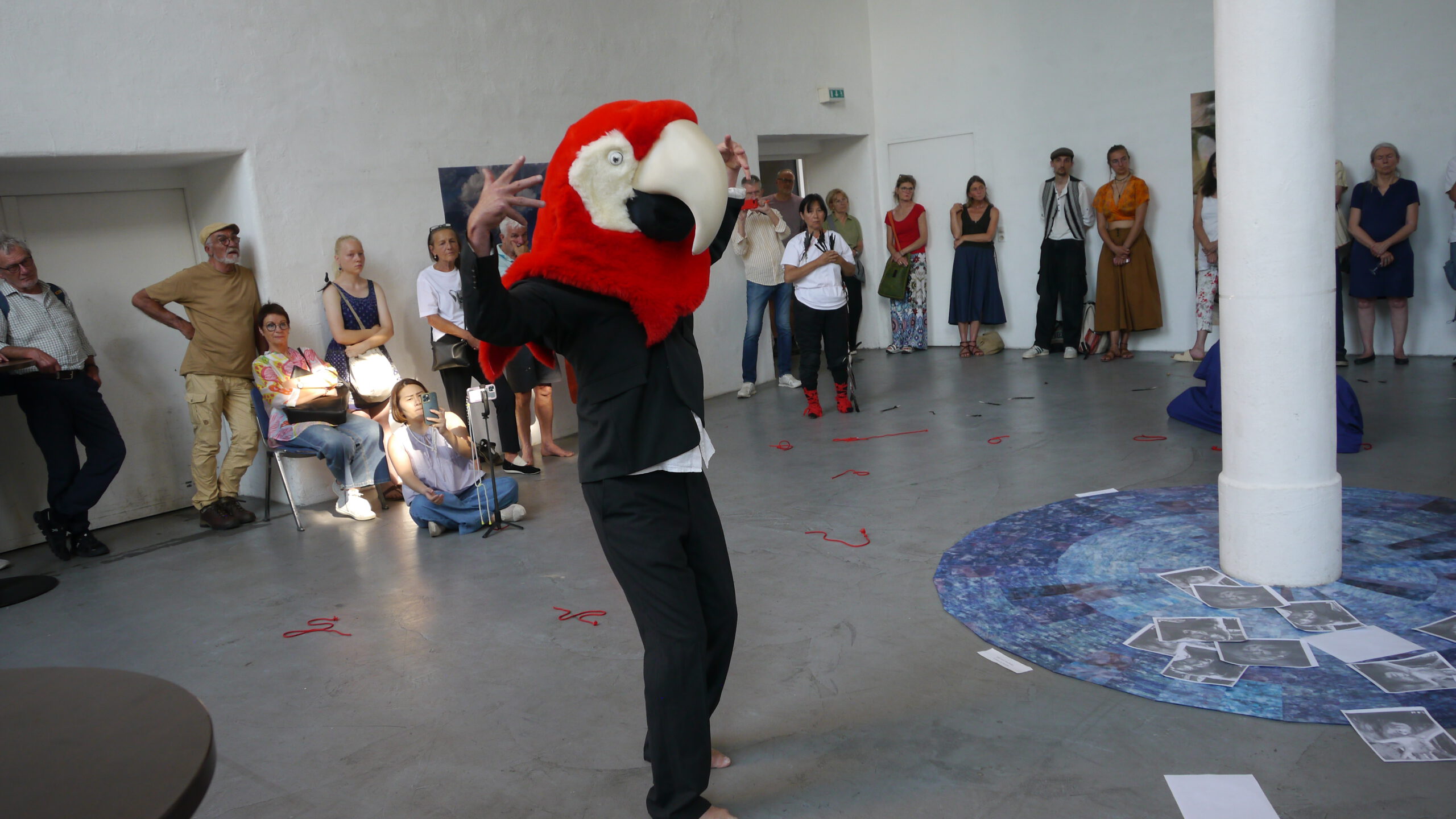
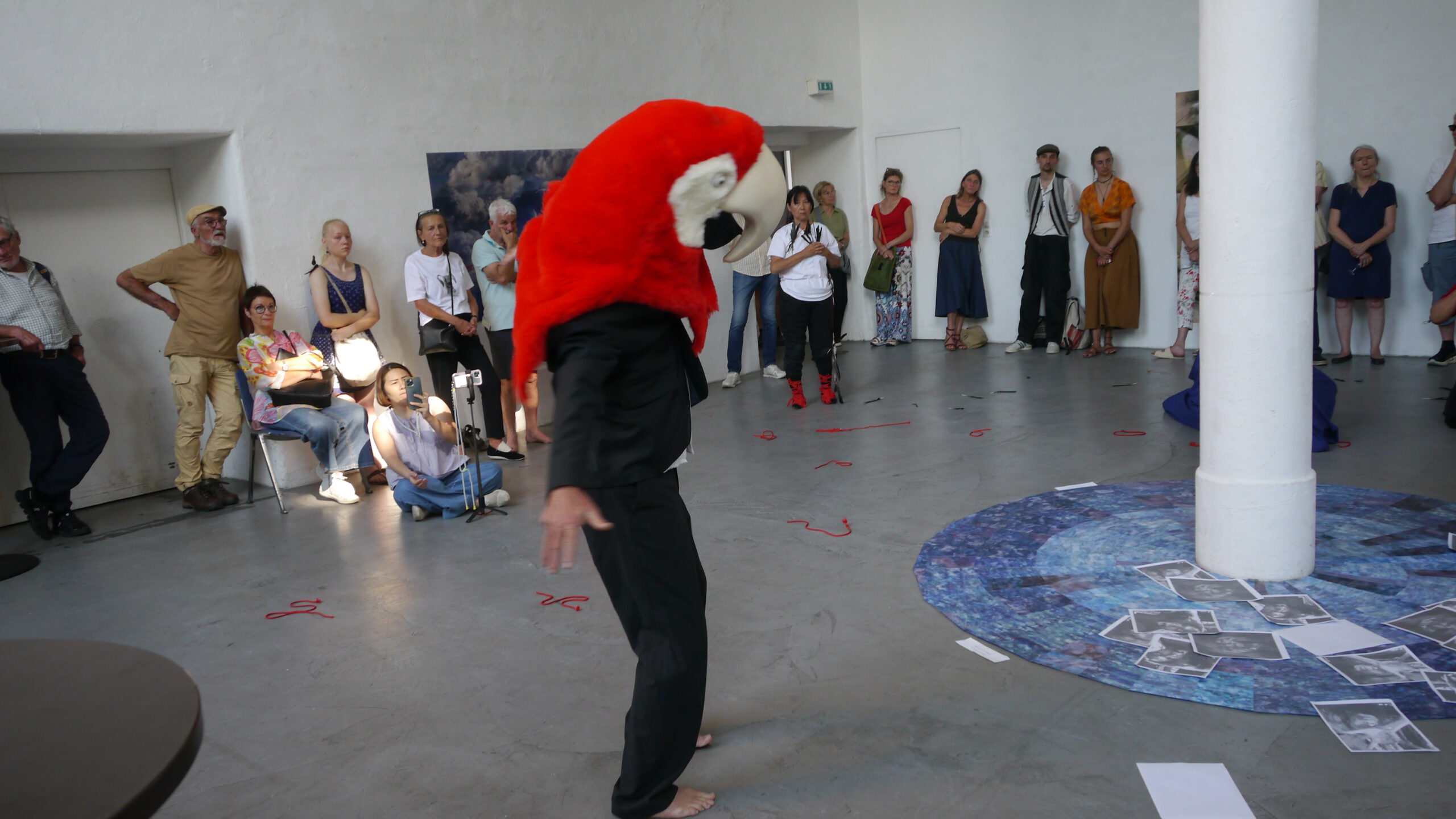
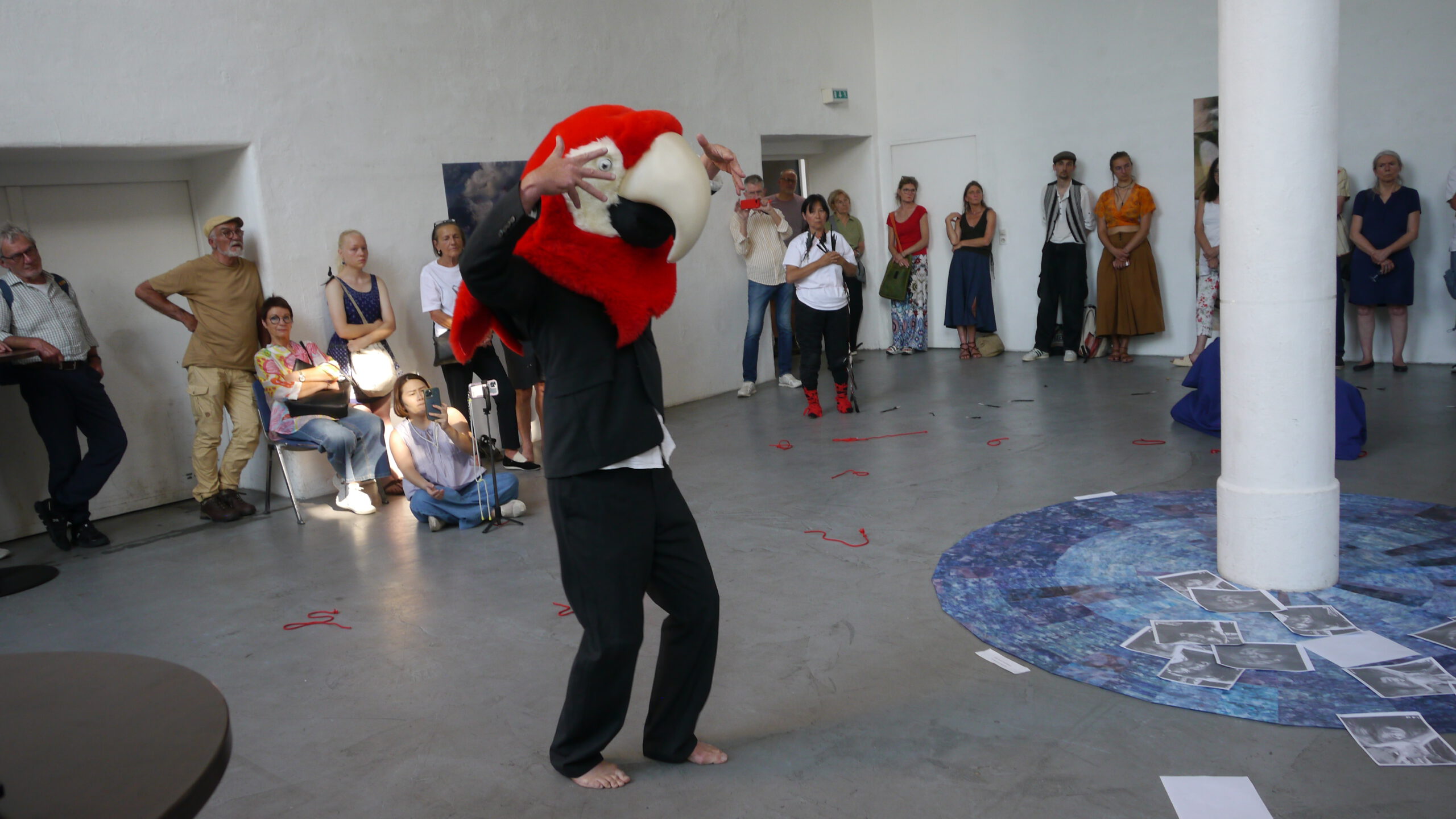
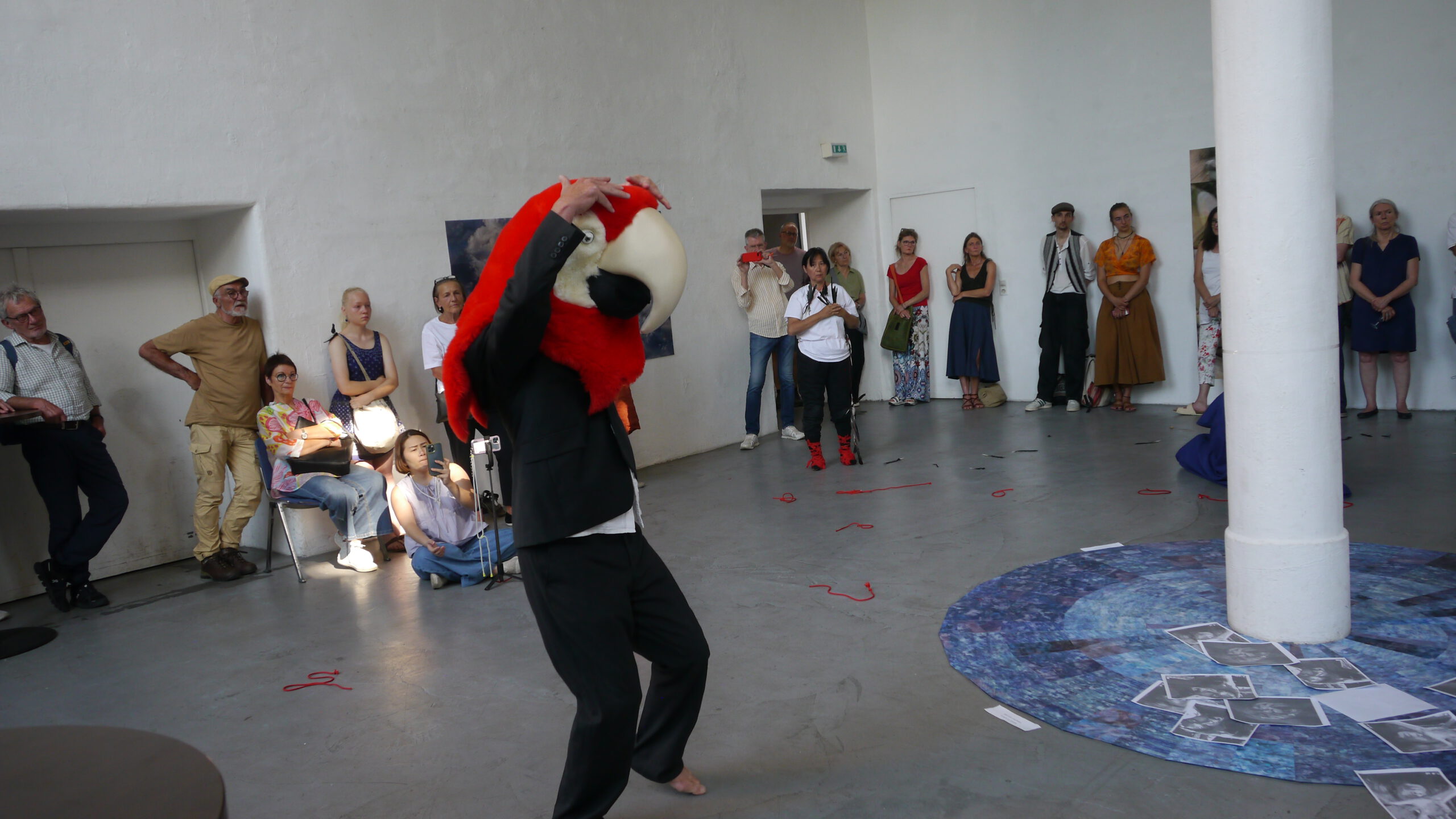
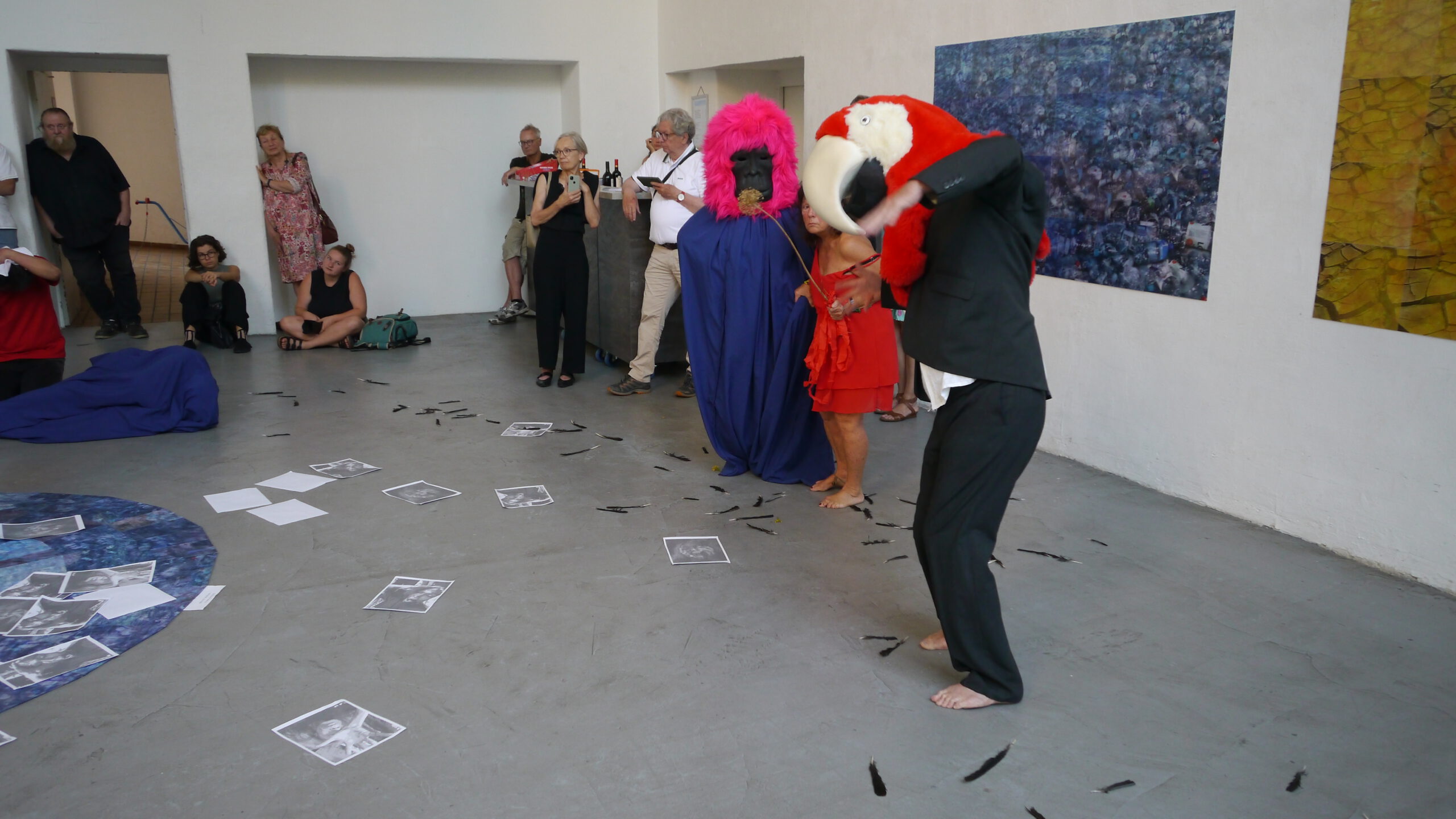
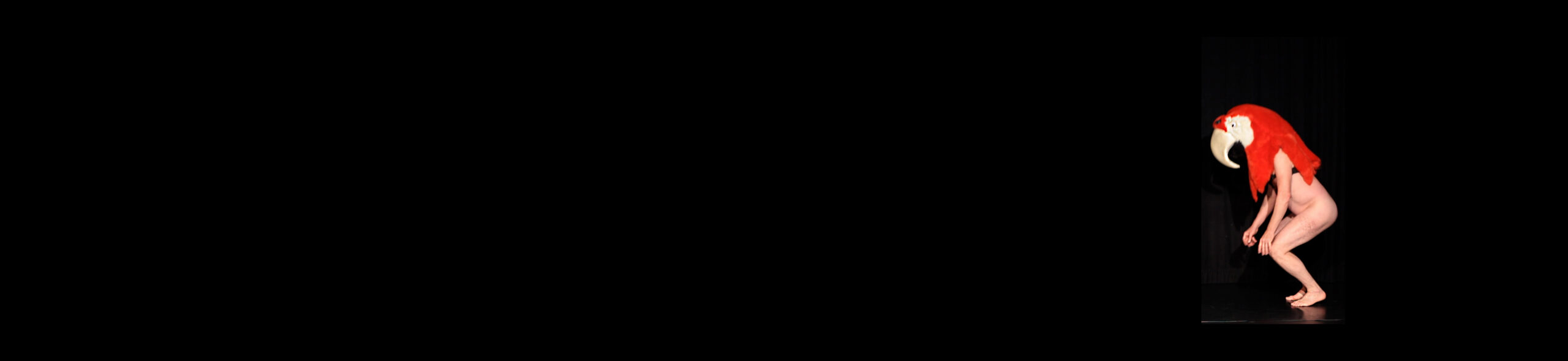
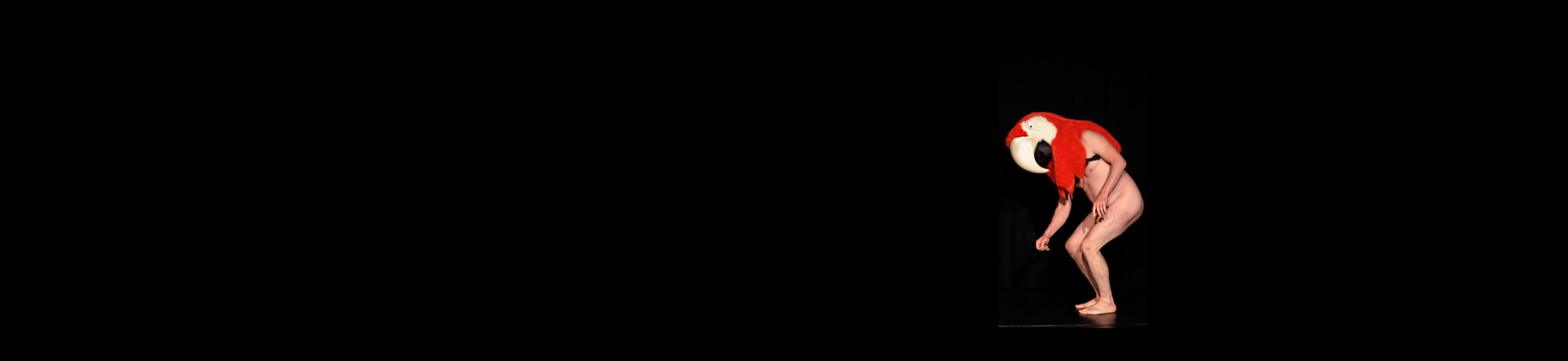
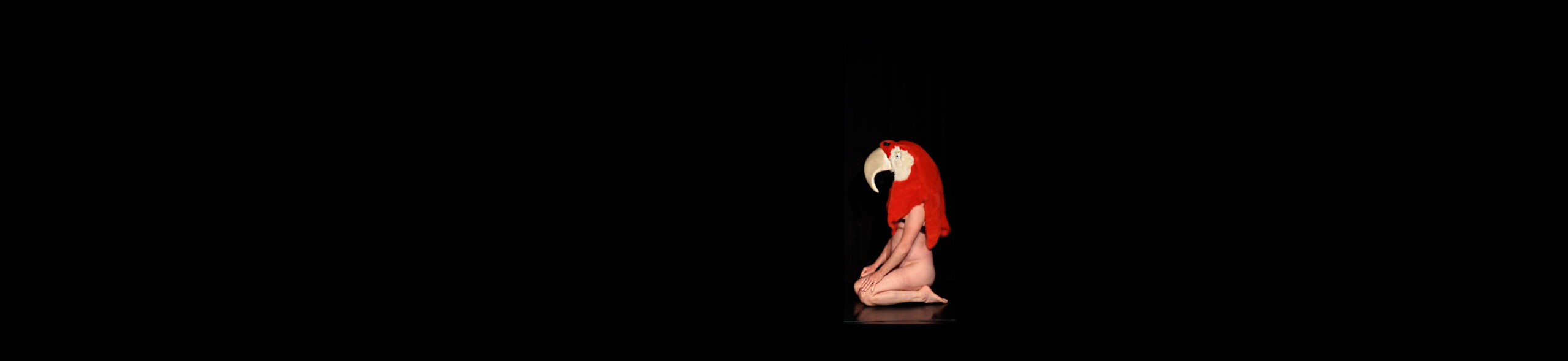
In der Performance erscheint eine Gestalt mit Papageienmaske. Sie bewegt sich durch den Raum, gestikuliert überzeichnet, ahmt nach, spiegelt und wiederholt. Körperhaltungen und Gesten der Zuschauer werden kopiert und variiert. Nachahmung wird zum Material der Performance.
Der Papagei fungiert als Maske des Menschen. In der Imitation entsteht keine Leere, sondern eine eigene Form von Wahrheit, die aus sozialer Anpassung, kollektiver Erinnerung und unbewusster Wiederholung hervorgeht. Die Figur agiert nicht originell, sondern relational, ihre Bewegung ist die Bewegung des Schwarms.
Das Wesen des Papageis bildet das symbolische Fundament der Kunstfigur. Als hochsoziale und intelligente Tiere nutzen Papageien vokale und motorische Imitation als Mittel der Zugehörigkeit. Ihre Fähigkeit, auch ziellose Bewegungen zu kopieren, verweist auf eine Nähe zum Menschen.
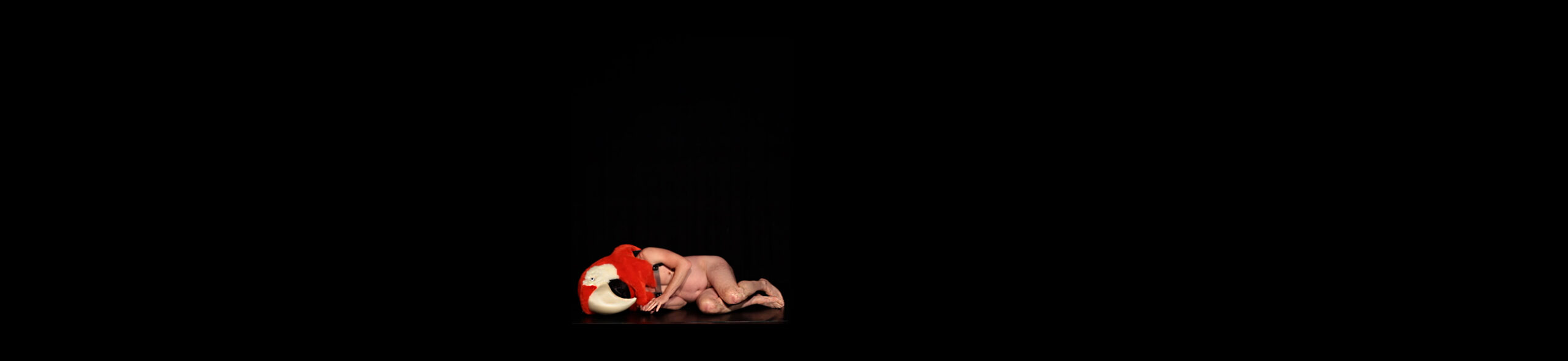
Der Papagei erscheint doppeldeutig: Symbol für Kommunikation und Intelligenz, zugleich für Gelehrigkeit und nachplappernde Torheit. Die Kunstfigur ist weder Karikatur noch Anklage, sondern Spiegel menschlicher Verhaltensmuster, Anpassung, Wiederholung, das Bedürfnis dazuzugehören. Am Ende steht der Hinweis, die Maske abzunehmen, um der Wirklichkeit hinter den Wiederholungen zu begegnen.
The Parrot as an Artistic Figure
In the performance, a figure wearing a parrot mask appears. Moving through the space, it gestures in an exaggerated manner, imitates, mirrors, and repeats. The postures and movements of the audience are copied and varied. Imitation becomes the material of the performance.
The parrot functions as a mask of the human. In imitation, no emptiness emerges, but a distinct form of truth, produced through social adaptation, collective memory, and unconscious repetition. The figure does not act “originally,” but relationally. Its movement is the movement of the flock.
The nature of the parrot forms the symbolic foundation of the artistic figure. As highly social and intelligent animals, parrots use vocal and motor imitation as a means of belonging. Their ability to copy even non-goal-oriented movements points to an unexpected proximity to humans.
The parrot appears as an ambivalent figure: a symbol of communication and intelligence, yet also of mere learnability and mindless repetition. The artistic figure is neither caricature nor accusation, but a mirror of human behavioral patterns, adaptation, repetition, and the desire to belong. In the end, the performance suggests removing the parrot mask, not to condemn imitation, but to confront the reality behind repetition.
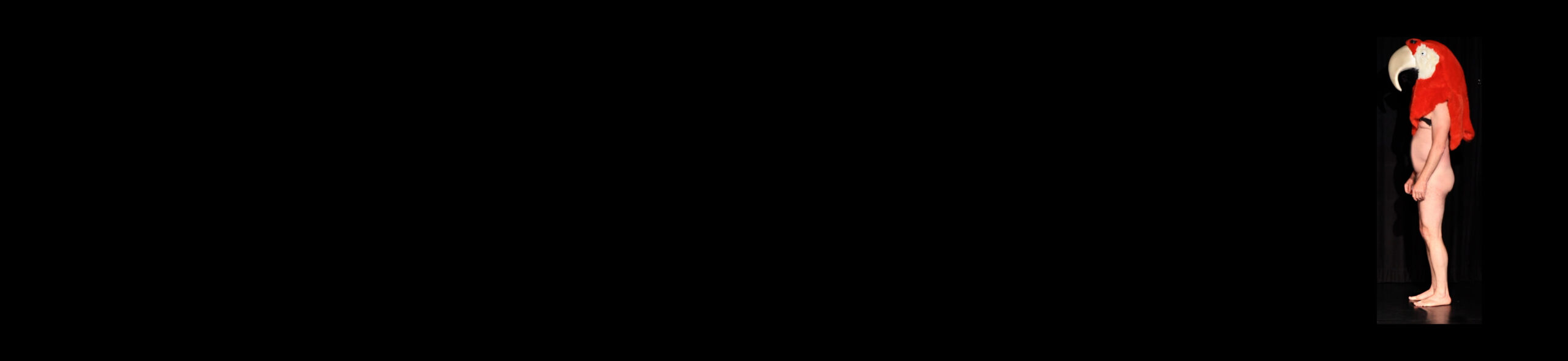
Performance, TPZ, Reutlingen, 2025